| 24.30 Megapixels | Nikon F | 35mm size sensor |
|---|---|---|
 | ||
 |  |  |  |  |
D750 SUMMARY
Placed between the D610 and D810, the Nikon D750 borrows from both models for a fantastic all-around multimedia DSLR. With a 24.3MP full-frame sensor and fast EXPEED 4 processor, the D750 captures outstanding, highly-detailed images with excellent dynamic range and high ISO performance. The D750 also has class-leading burst shooting capabilities and excellent low-light AF. With an articulated LCD screen and other high-end movie features, the D750 is also a great option for multimedia producers and videographers.
PROS
Outstanding image quality with great dynamic range and high ISO performance; Class-leading burst rate; Very good 51-pt AF system; AF system works in very low light; Deep, comfortable handgrip; Articulated LCD monitor; Excellent battery life; Uncompressed 4:2:2 HDMI video output; Built-in Wi-Fi.
CONS
Buffer fills quickly with 14-bit RAW; Sluggish Live View AF; Shutter speed tops out at 1/4000s; OVF coverage closer to 97%; Weak low-pass filter is great for detail but higher risk of moire.
PRICE AND AVAILABILITY
Available at a list price of US$2,300 or thereabouts body-only, the D750 is also sold in a kit with the AF-S NIKKOR 24-120mm f/4 VR zoom lens for about US$3,600. A MB-D16 battery grip is also be available with a suggested list price of US$485.
IMAGING RESOURCE RATING
5.0 out of 5.0
Nikon D750 Review
Updates:
10/30/2014: Field Test Part I: Physical features and general shooting
11/13/2014: Field Test Part II: Performance Deep-Dive
12/03/2014: Image Quality Comparison & Print Quality Analysis
03/26/2015: Flare Issue Repair & Conclusion
10/30/2014: Field Test Part I: Physical features and general shooting
11/13/2014: Field Test Part II: Performance Deep-Dive
12/03/2014: Image Quality Comparison & Print Quality Analysis
03/26/2015: Flare Issue Repair & Conclusion
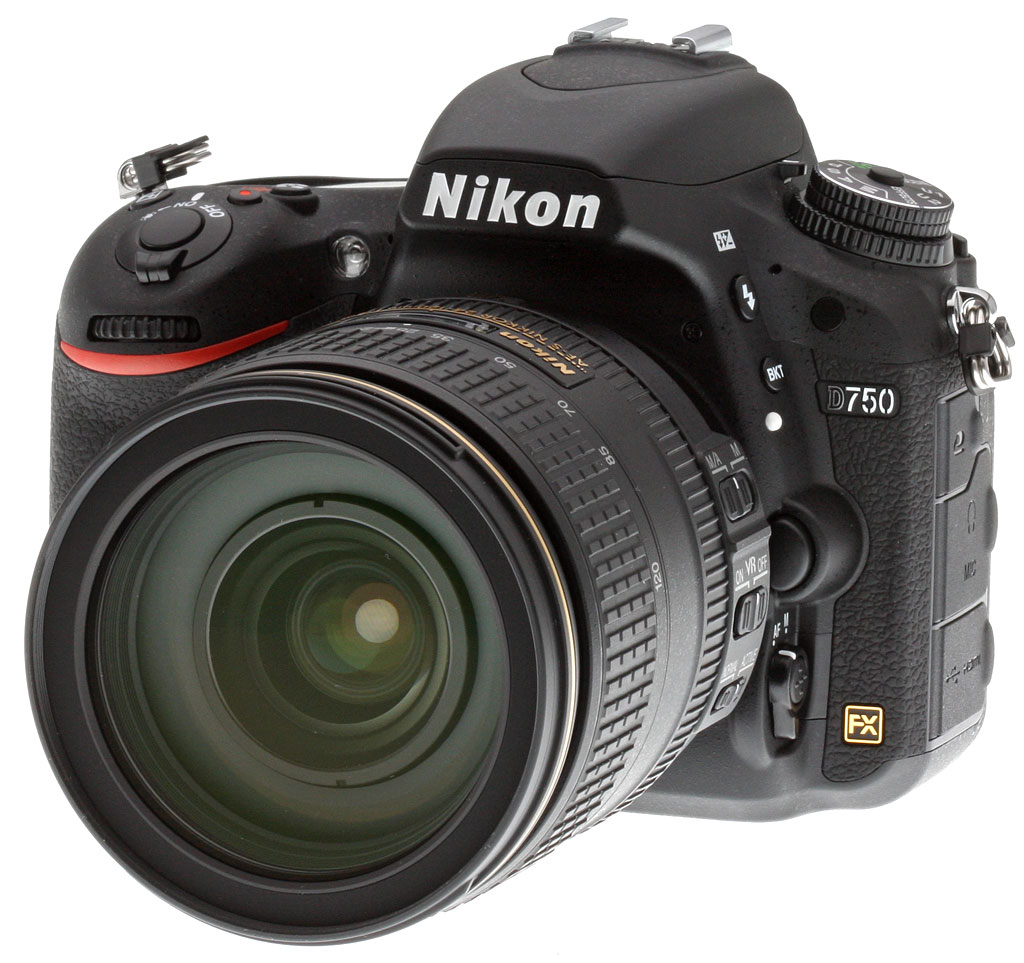
It's been a long time coming, but the spiritual successor to the much-loved Nikon D700 is finally here. A lot has changed in the market since the D700 was introduced as Nikon's first truly affordable full-frame enthusiast DSLR back in 2008, and likewise, the brand-new Nikon D750 is replete with new features that bring it right up to date. Not surprisingly, given that it arrives on the scene some six years after the D700's debut (and almost three years after it was discontinued), the Nikon D750 is a new camera from the ground up.
Even its place within the line has changed: No longer is it the most affordable full-frame option in Nikon's DSLR lineup. Instead, the D750 now sits in between the existing Nikon D610 and D810, although its US$2,300 pricetag is closer to that of the former. And its specification is also something of a hybrid of the two, although in some areas it treads its own path. (In fact, at least one feature is completely unique among Nikon's FX-format line.)
The D750's 24.3-megapixel, full-frame sensor is similar to that in the Nikon D610, but it's paired to the more powerful EXPEED 4 processor from the D810. Full-resolution performance is just slightly better than either camera at 6.5 frames per second, while the sensitivity range falls somewhere in between.
Also borrowed from the D810 are the Nikon D750's high-res 91,000-pixel RGB metering sensor and 51-point Multi-CAM 3500FX autofocus module, although the latter has been refined and now works in even lower light down to -3EV. (That's a record for a Nikon DSLR of any format.)
However, its exposure system is more akin to that of the D610, with the same 1/4,000th second top shutter speed, 1/200th second flash sync speed, and 150,000 cycle shutter life. The highlight-weighted metering mode of the D810 does make the cut, though.
The D750's pentaprism viewfinder is similar to those of the D610 and D810, but its large, high-res 3.2-inch LCD monitor is now articulated, which is a first for a Nikon FX-format camera. Also new is in-camera Wi-Fi wireless networking, although you can still use the external Wi-Fi dongle if you need wired connectivity or to maximize battery life, since the UT-1 Communication Unit has its own separate battery pack. And speaking of battery life, that's better than ever before: The Nikon D750 is rated as good for 1,230 shots on a charge, surpassing both the D610 and D810.
Add in a brand-new body with a unique design that allows it to constructed both slimmer and lighter than ever before, while maximizing handgrip depth for a comfortable hold in the process, and the Nikon D750 looks to offer a lot of camera for the money. Available at a list price of US$2,300 or thereabouts body-only, the D750 is also sold in a kit with the AF-S NIKKOR 24-120mm f/4 VR zoom lens for about US$3,600. A MB-D16 battery grip is also available with a suggested list price of US$485.
If you're ready to order now, you can use one of our trusted affiliates and help support Imaging Resource by using the links below.
- Nikon D750 Body-Only, $2,296.95: ADORAMA | AMAZON | B&H
- Nikon D750 with AF-S NIKKOR 24-120mm f/4G ED VR Lens, $3,596.95: ADORAMA | AMAZON | B&H
- Nikon MB-D16 Multi Power Battery Pack for D750, $369.95: ADORAMA | AMAZON | B&H
Let's take a closer look at the Nikon D750, and see how it compares to its siblings!
Nikon D750 Walkaround
by Mike Tomkins
Although spiritually it's a successor to Nikon's original enthusiast full-frame camera, the D700, in terms of its design and control layout the Nikon D750 is more closely-related to the slightly more affordable D610, which now forms the entry-point to the company's FX-format DSLR line. For that reason, we'll be drawing our comparisons against that model.
Although the two look quite similar externally, the Nikon D750 is the more futuristic beneath the skin. The reason? A brand-new construction method using what Nikon is referring to as a "monocoque" structural skin for the front panel, which wraps around to most of the camera's base as well.
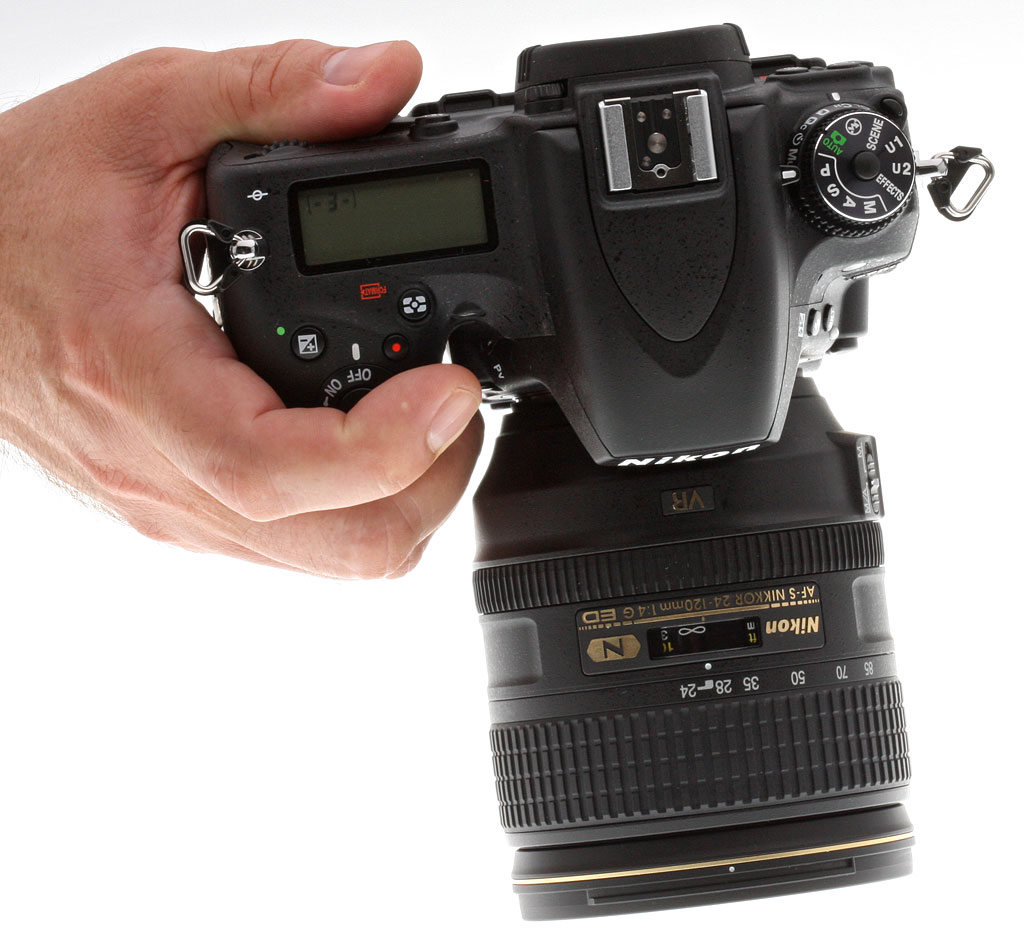
This front skin, constructed from a carbon-fiber composite, is capped with magnesium-alloy panels on top and at the rear, completing an overall shell that, says Nikon, is "unprecedentedly slim" for an FX-format camera, and which allows a deeper handgrip without increasing the camera's size.
In fact, the D750 is about 0.1 inches (4mm) slimmer than its entry-level sibling. The light carbon-fiber panels also help keep weight to a minimum, with a result that the D750 is around 0.3 ounces (10g) lighter than the D610.
But switching to a carbon-fiber composite front deck isn't the only change that Nikon had to make to provide the deeper handgrip -- our understanding is that the camera's internals have also been significantly rearranged. Motors for the shutter mechanism and aperture control, for example, had to be relocated. The battery slot, too, was redesigned to place the battery pack parallel with the camera's rear deck, rather than the more typical position spanning the depth of the handgrip.
Pick the camera up and you notice that it's relatively compact and lightweight for the class, and that the handgrip is more comfortable with slightly more generous room for your fingertips, wrapped around the grip and nestled beside the lens mount. It still feels solid and like a quality piece of kit, though -- and of course, it's still weather-sealed, with an array of dust and water-resistant seals throughout.
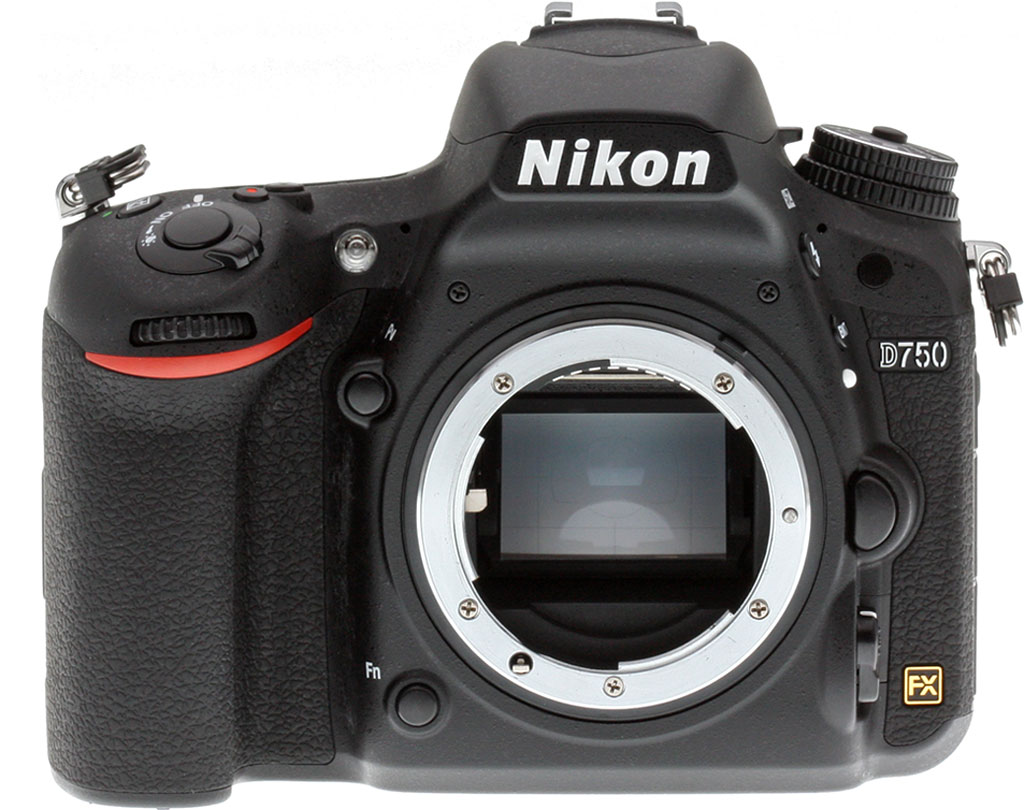
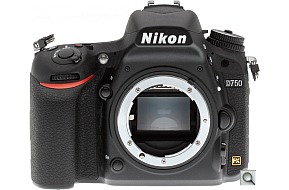
Seen from the front, the Nikon D750 looks very similar indeed to the D610. All controls are in approximately the same places, but the new model is just slightly less rounded-off than its sibling, and the base beneath the mirror box a little wider. Really, though, there's not much to call between the pair.
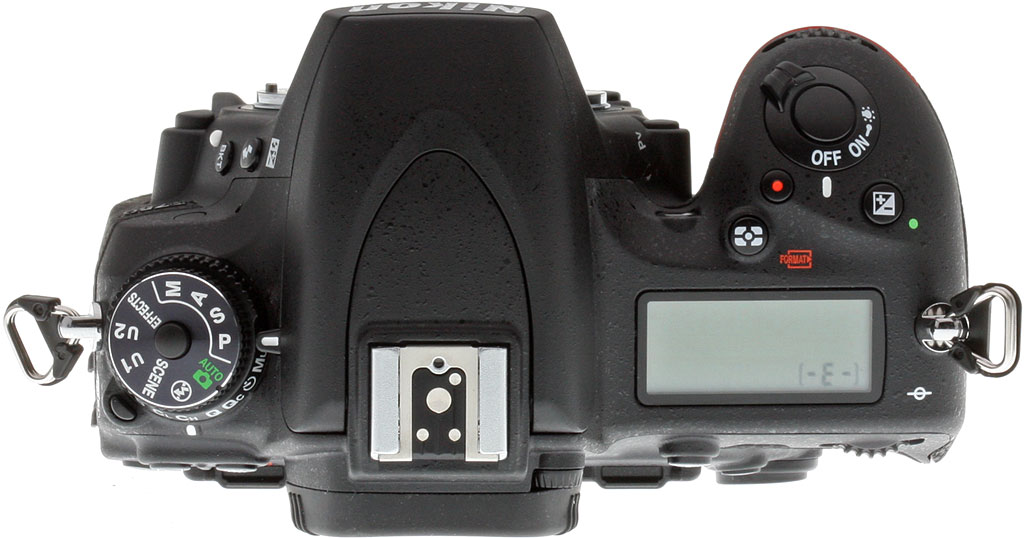
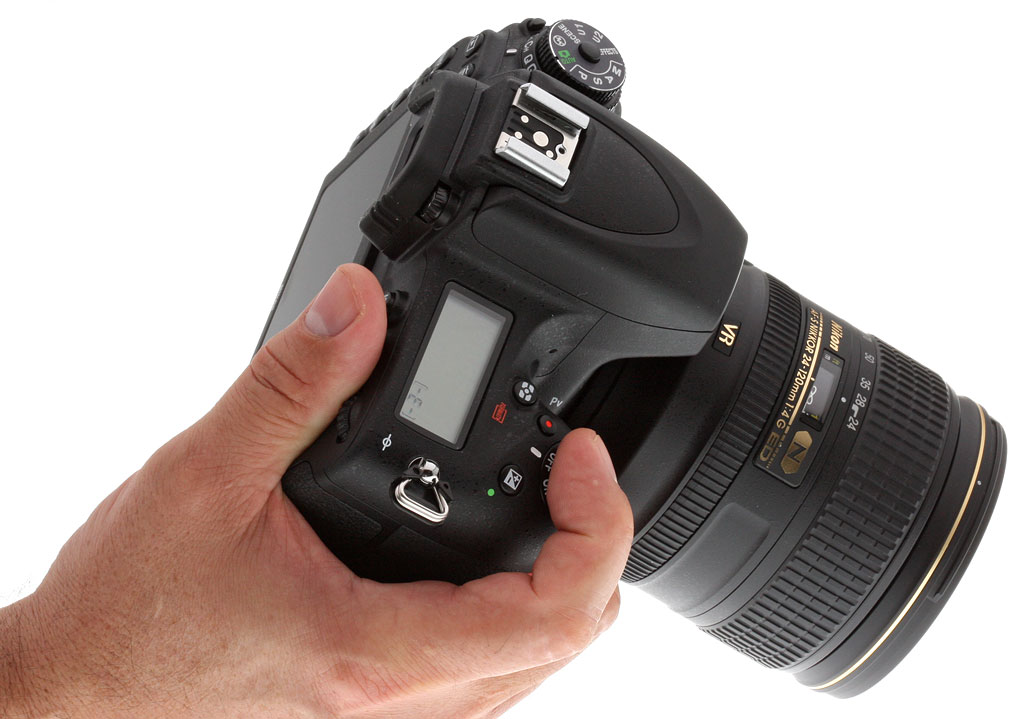
Moving to the top deck, the difference in depth is immediately noticeable when you compare both cameras side by side. The D750's handgrip protrudes just a little less, and yet thanks to the reduction in body depth on both sides of the mirror box, it provides quite a bit more room for your fingers. It also angles inwards towards the body more steeply, so the grip doesn't feel quite so thick. The controls, though, are all in essentially the same locations.
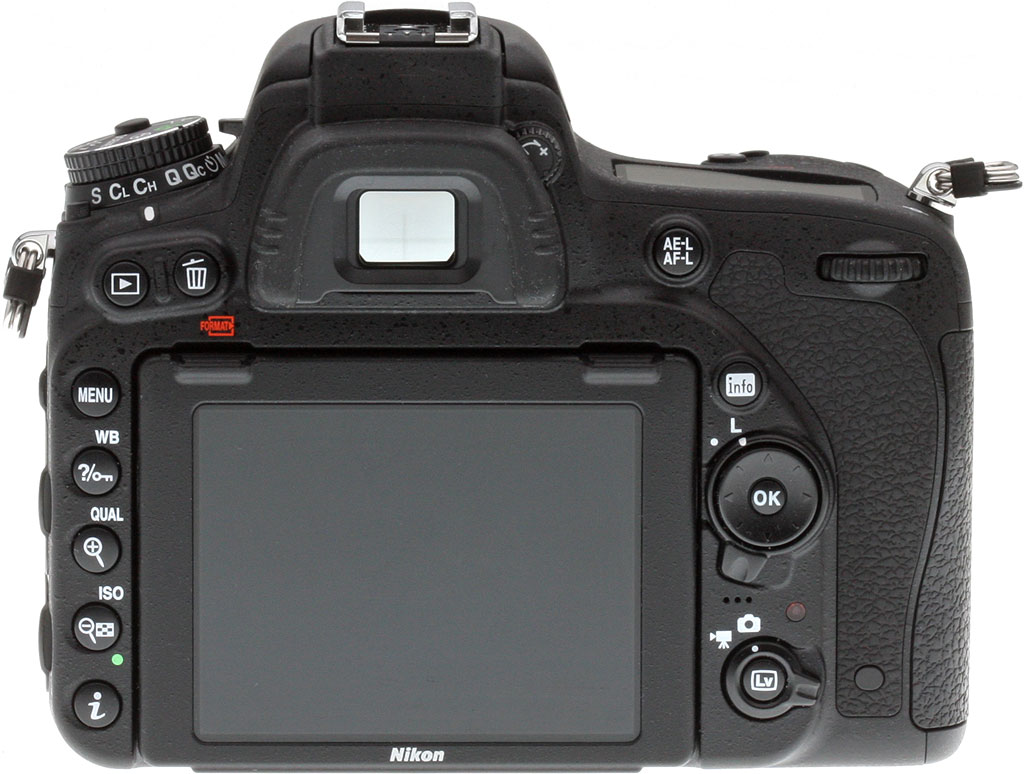
It's once you move to the rear that a greater difference becomes apparent. For one thing, the brand-new, articulated LCD of the Nikon D750 is obvious, thanks both to the seam around its edges that shows it can be moved, and to two small protrusions that serve to give your fingernail grip to pull out the top of the monitor.
And while at first glance the column of buttons lining the LCD looks similar, once you take a closer look you realize that the Retouch / Picture Control button of the D610 is gone, making way for the Help / Protect / White Balance, Playback Zoom In / Quality, and Playback Zoom Out / ISO Sensitivity buttons each to move up one spot. At the bottom of the column, space is freed up for an i-button as seen in cameras like the D7100, which can be used to pull up the information display, or to adjust settings in live view and movie modes.
Jumping across to the other side of the LCD monitor, the changes are simpler. Nothing has been removed, it's just been rearranged, with the Info button moving above the Four-way Controller pad with its locking switch, and the Live View button surrounded by the Still / Movie switch. The small three-hole grille between these latter two controls is the speaker, and just right of this, the card access lamp. Otherwise, everything else is much where it was located on the D610.
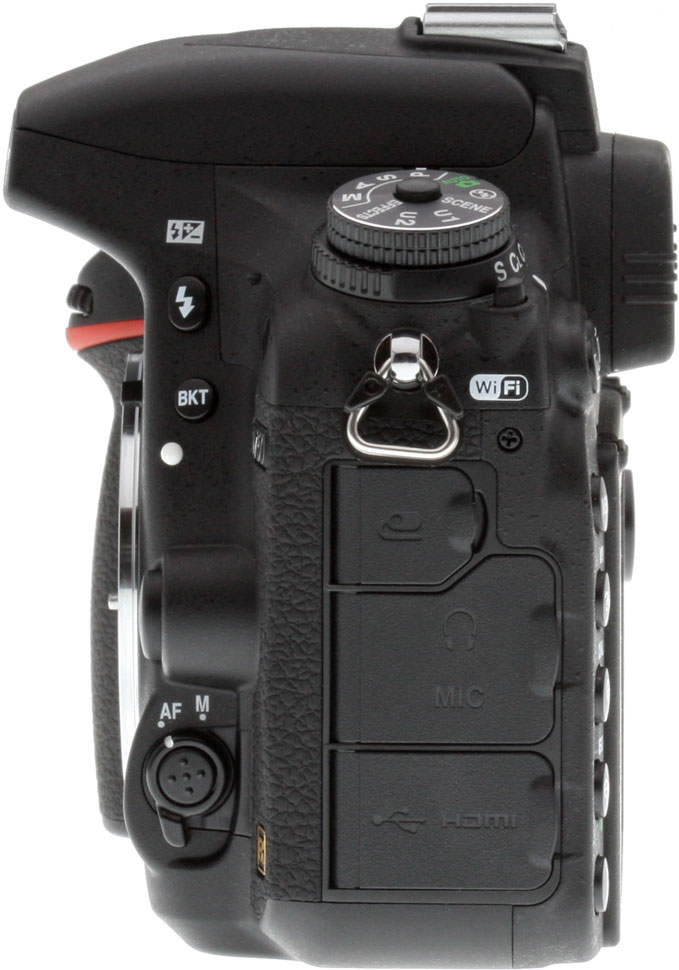
Switching to the left-hand side (as seen from the rear), the selection of controls and access panels is much the same, but the arrangement of the latter has changed. Where the D610 had, top to bottom, a flap for the headphone and microphone jacks, another for the USB and HDMI ports, and finally one for the remote control, the D750 shuffles everything downwards so that the remote control terminal can be moved to the top. There's also a tiny little logo above the topmost access panel cover, hinting at the presence of Wi-Fi wireless networking connectivity in-camera. But we'll come back to that in a moment.
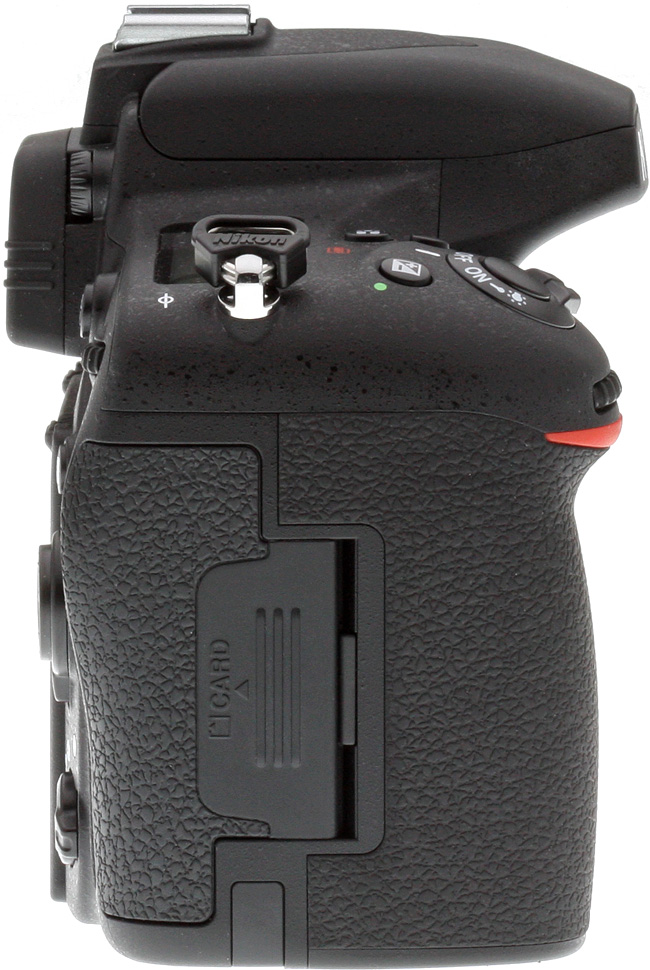
Next, we move to the right side, where the only thing we really have to say is that yes, that handgrip is definitely less deep overall. It protrudes a little less both from the front and rear of the camera, and should make for a little easier fit in smaller camera bags, at least without a lens attached.
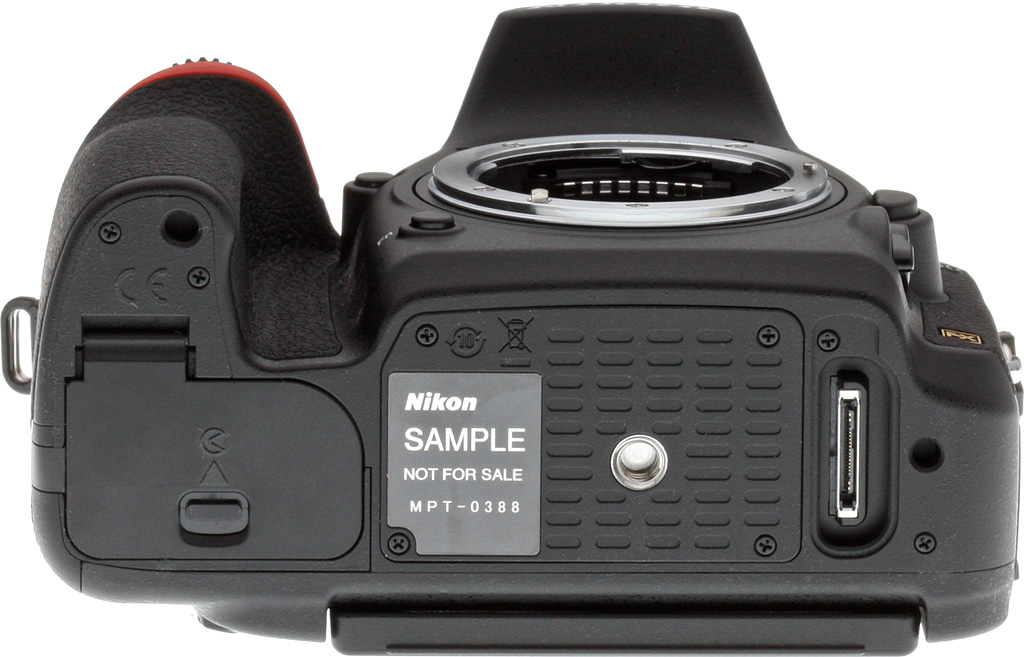
And finally, we move to the base of the camera. Although there's not a huge amount to see here, there are several things worth noting. Firstly, the tripod mount has moved forwards a little, and in the process rather further from the sensor plane. Secondly, as noted previously you can see that the battery pack now faces across the camera, rather than sideways to sit inside the handgrip. And thirdly, with the battery compartment door now further back, the connector for the optional portrait / battery grip has jumped across the camera to the other side.
Nikon D750 Flare Issue & Repair
A few months after the Nikon D750 began to arrive in customers' hands, reports began surfacing of strange flare and dark banding problems in certain shooting conditions, such as with strong overhead, studio lighting directed towards the camera, or shooting towards the sun. In our investigation of the issue, we found that the issue was due to internal reflections from the autofocus sensor optics. We covered this phenomenon in-depth, and you canread about it here, where we tested the D750 along with other full-frame DSLRs in both studio and natural lighting conditions.
It wasn't long before Nikon issued an official response that it was investigating the problem, and soon thereafter, they instigated an official repair program for affected cameras -- which were limited to a certain range of serial numbers -- free of charge. We ended up with two review samples of the D750, and one of our review samples happened to be in this particular range of serial numbers. We sent our unit for the fix, and after it was returned, the flare issue was gone. The images below show the difference between an unmodified early D750 and the second D750 after the fix was applied:
 |  |
Unaltered early D750
|
Fixed D750
|
It's important to note that our discussion here is now just for historical reference; all currently-shipping D750s are constructed using the updated design and components.
So what was actually repaired or changed inside the camera? We took some close-up shots of the original and updated D750s to find out...
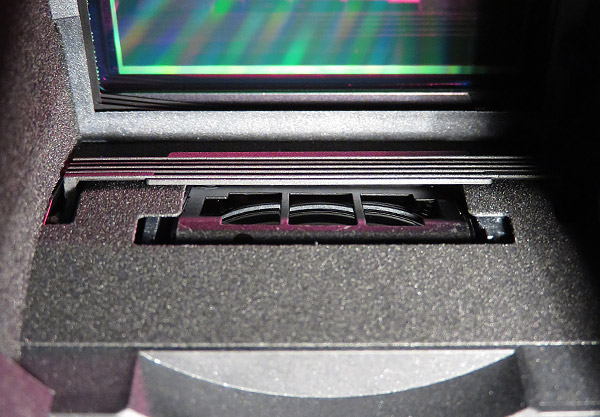 |
Original AF sensor housing structure.
|
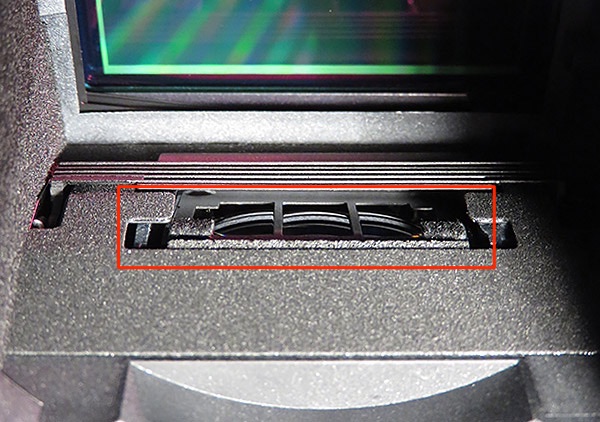 |
Updated AF sensor housing structure. Notice the additional anti-reflective coating applied to the front of the AF housing. It's a little harder to see in this image, but it also appears that the openings in the top of the AF housing are a bit narrower (the rectangular openings don't extend quite as far back as on the original).
|
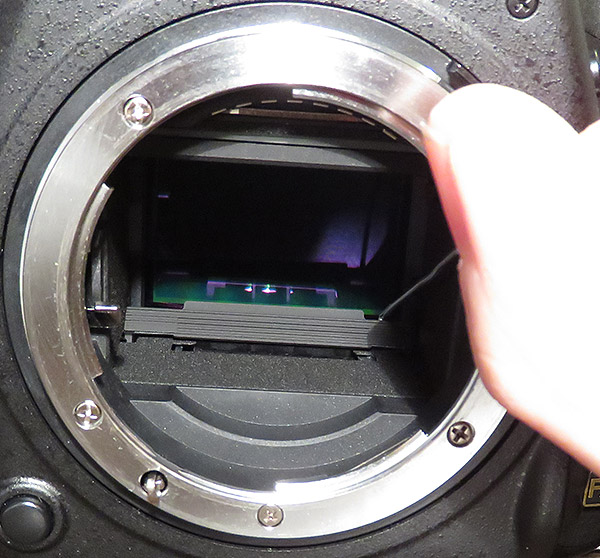 |
When the mirror is raised, a light-baffle flap drops partially over and behind the AF assembly. Here, we've (gently!) tugged the baffle upright on the original body, to show its shape. Note in particular the little lip that protrudes at the top. When the baffle is in its normal position during an exposure, this extension ends up behind the AF assembly, between it and the bottom of the sensor.
|
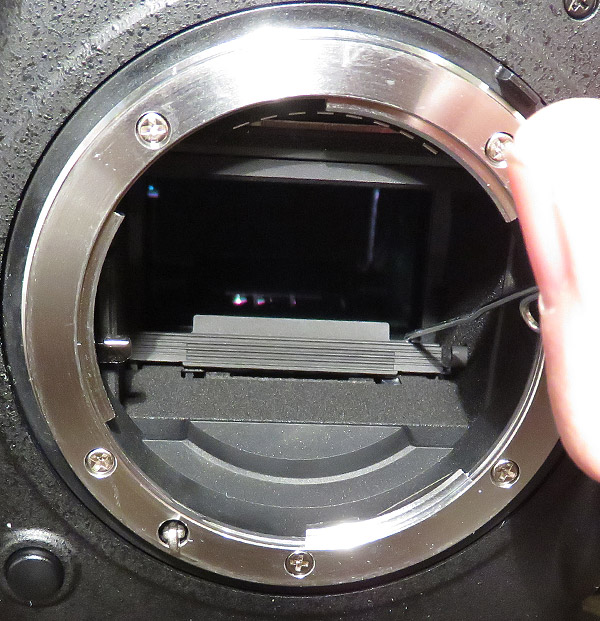 |
Here's the upgraded light baffle structure. Notice the larger protruding lip at the top of the flap structure. During exposures, this projection extends further into the gap between the AF assembly and image sensor, to better block any stray light refracted or reflected by the AF optics.
|

No comments:
Post a Comment